Singapore’s food and beverage scene is booming. The market is valued at USD 28.92 billion to 34.24 billion in 2026 and projected to reach USD 68.14 billion by 2030. That’s massive growth, but here’s the harsh reality: over 3,000 F&B outlets closed in 2024 alone.
The difference between F&B businesses that thrive and those that struggle often comes down to marketing. Not just any marketing, effective, strategic marketing for F&B that actually drives customers through your doors or to your delivery apps.
Whether you’re running a hawker stall in Chinatown, a café in Tiong Bahru, or a restaurant in the CBD, this guide gives you practical strategies that work in Singapore’s competitive market. We’ll cover zero-budget tactics to paid advertising, platform-specific approaches to review management, and expensive mistakes to avoid.
Table of Contents
What Is Marketing in the F&B Industry?
Marketing for F&B is everything you do to attract diners, build your brand, and drive revenue. Simple as that. But F&B marketing is different from selling shoes or software, it operates in a unique environment where decisions happen fast, emotions run high, and a single photo can make or break a sale.
1. How F&B Marketing Is Different
- Decisions happen in seconds. Someone scrolling Instagram at 11am sees your laksa photo and either feels hungry enough to order or scrolls past. You have maybe 2 seconds. In Singapore, 48% of people eat out several times a week, constant opportunity, constant competition.
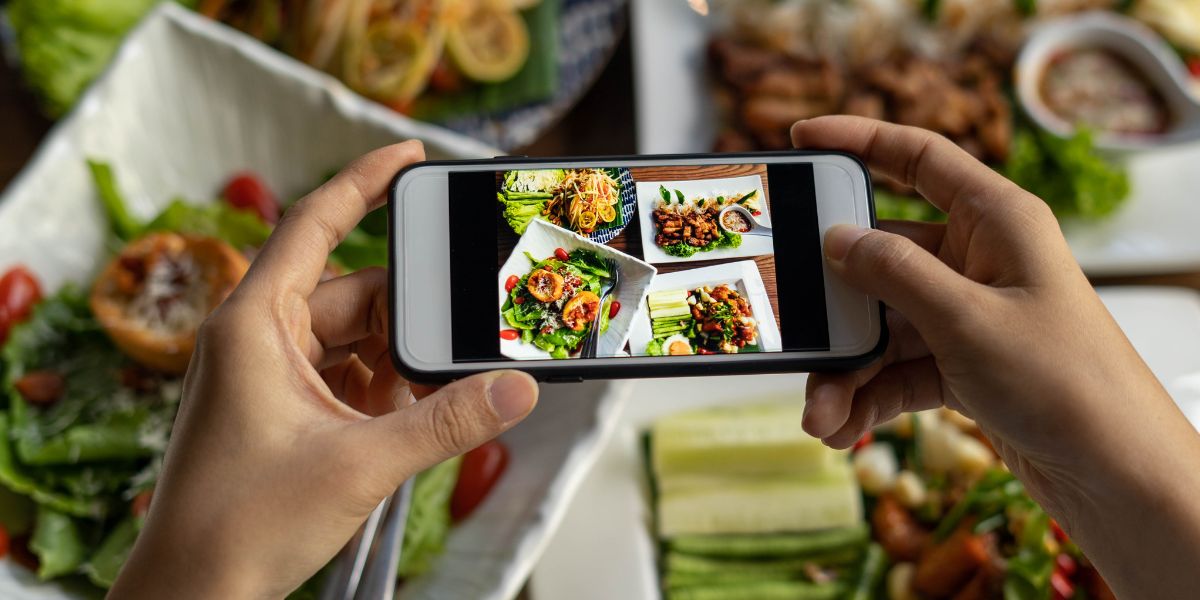
- Food is emotional and sensory. A poorly lit photo of your signature dish can turn someone off completely, even if it tastes incredible. Visual quality isn’t just nice-to-have for marketing for F&B, it’s make-or-break.
- You compete physically and digitally. Your restaurant needs foot traffic AND delivery app presence. With 68% of Singaporeans using food delivery platforms daily, you can’t ignore digital. But physical experience still matters, people want to dine out.
- Reviews control your reputation. Before trying a new restaurant, 95% of consumers read online reviews. One star can literally make or break you. Research shows a one-star increase leads to 5-9% revenue growth.
2. What Good F&B Marketing Achieves
- Drives foot traffic and online orders. Marketing gets customers to choose you over dozens of other options.
- Increases average order value. Strategic upsells, bundles, and menu design get customers spending more per visit.
- Builds brand recall. In a market with hundreds of choices within 5km, being memorable matters.
- Creates repeat customers. New customer acquisition costs 5-25X more than retention.
Singapore’s F&B Landscape: Why It’s Unique
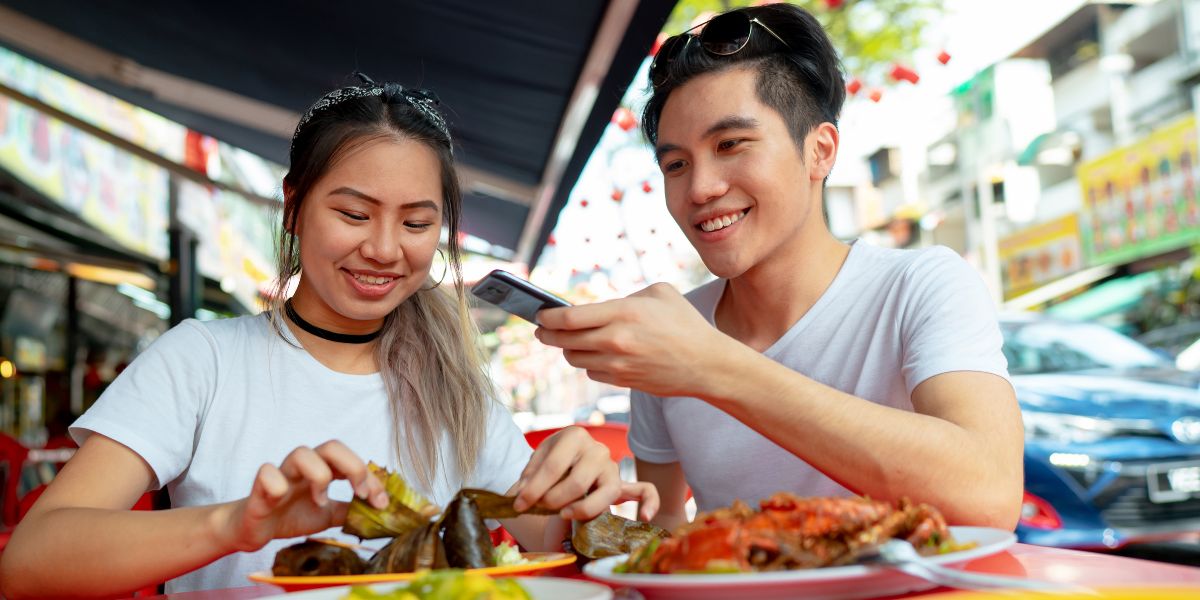
You can’t copy-paste generic marketing advice. Singapore’s F&B scene has specific dynamics you need to understand.
1. What Makes Singapore Different
- Multi-ethnic market. Your Chinese, Malay, Indian, and Eurasian customers have different dining habits. About 77% of Singaporeans prefer to dine out for dinner, but what they order varies significantly.
- SGD 3 to SGD 300 spectrum. Hawker stalls win on Google Business Profile optimization and word-of-mouth. Fine dining wins on influencer partnerships and experiential marketing.
- Sky-high rent creates pressure. Commercial rents are brutal. Every empty seat impacts your ability to pay rent. Marketing efficiency is critical, no room for vanity metrics.
- Everyone’s on their phones. Singaporeans spend an average of SGD 118 monthly on food delivery, up from SGD 108 in 2022.
2. Understanding Your Singapore Customer
- They research obsessively. Singaporeans read an average of 10 reviews and spend nearly 14 minutes researching before visiting new restaurants. Google reviews dominate at 46% preference.
- GrabFood is king. GrabFood holds 56% market share, Foodpanda 35%, Deliveroo 8%. About 84% say GrabFood is their go-to
- Price-sensitive but quality-focused. While 64% choose platforms based on cost and discounts, they’ll pay premium prices for quality experiences.
How Modern Diners Find Restaurants
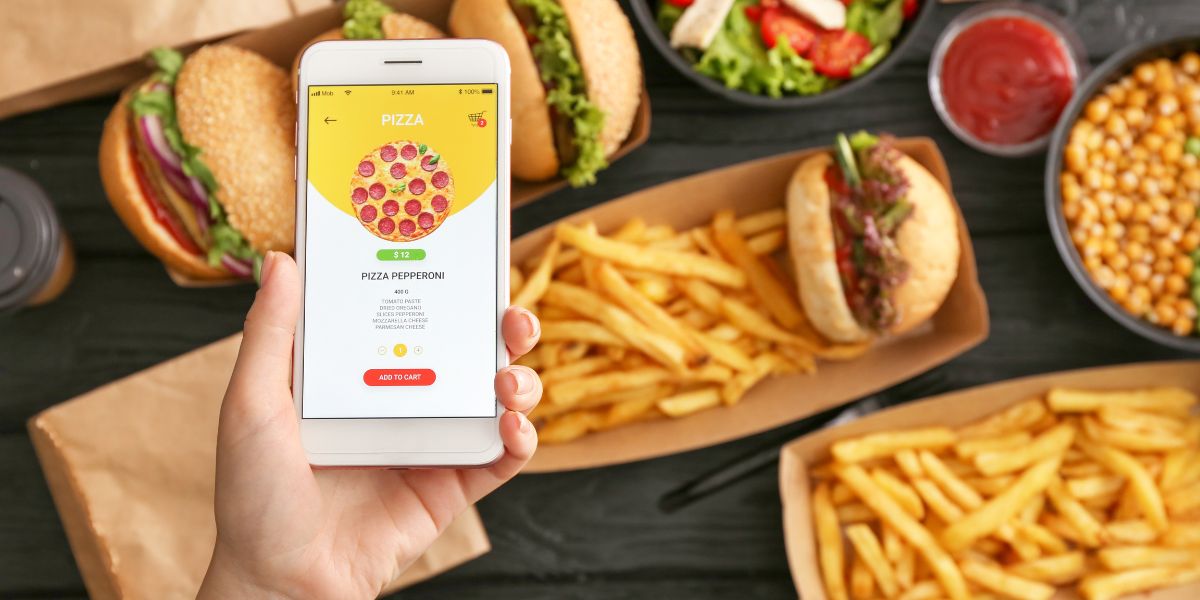
Today’s customer journey starts online, often hours before they eat.
- Social media drives discovery. Instagram Reels and TikTok have changed how people find restaurants. About 57% of consumers read restaurant reviews online, jumping to 61% for millennials.
- Real customer content beats ads. User-generated content is gold because it’s authentic. This is why encouraging customers to post and tag you matters, it’s free marketing that converts.
- Delivery apps are search engines. With 68% using delivery platforms daily, apps like GrabFood have become discovery tools. How you appear, photos, ratings, descriptions directly impacts orders.
- “Near me” searches convert fast. 76% of people who search nearby visit that business within a day. If your Google Business Profile isn’t optimized, you’re losing customers actively looking for you.
The Marketing Frameworks That Work

1. The 4 P’s for F&B (Updated for 2026)
- Product: Your menu is strategic. Identify hero items (high-margin dishes that photograph well) and push them hard. Limited-time offers create urgency.
- Price: SGD 8.90 feels different from SGD 9.00. Bundles increase order value without feeling like upselling.
- Place: Your “place” includes Google Business ranking, delivery app placement, website ordering, and social media. Each must work seamlessly.
- Promotion: Mix social media ads, influencer partnerships, customer content, and email. The trick is finding your target audience on platforms they actually use.
2. The 3-3-3 Rule: Keep It Simple
- 3 Content Types: Menu showcase, social proof, brand story
- 3 Platforms: Instagram (visual discovery), Google Business Profile (local search), GrabFood (for most Singapore businesses)
- 3 Goals: Awareness, conversion, retention
Focus on three of each. This prevents being everywhere but effective nowhere.
The Digital Channels That Drive Revenue
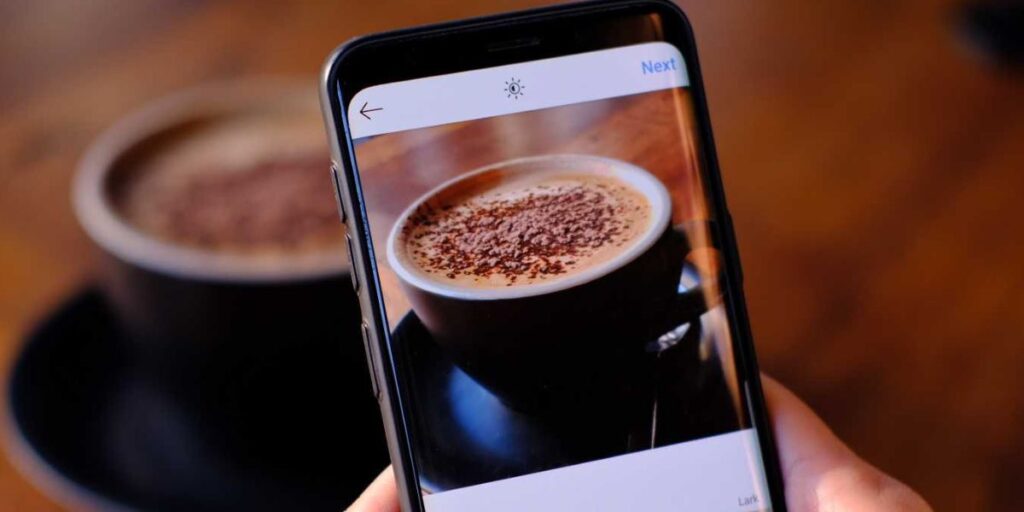
1. Instagram: Still the F&B King
- Reels are your discovery engine. Short-form video gets way more reach than static posts. Show food being prepared, the sizzle of your signature dish, customer reactions. Use trending audio, it matters for algorithm reach.
- Stories keep you top-of-mind. Daily specials, polls, countdown timers. Use location tags, people browse Stories by location.
- Your feed is your portfolio. Professional-quality photos of hero dishes. Consistent visual style, same filters, similar composition.
Practical tips: Post when your audience is active (11am-1pm for lunch, 6pm-8pm for dinner). Use 10-15 hashtags mixing location, cuisine, and trending food tags.
2. TikTok: The Viral Discovery Machine
TikTok’s algorithm can make unknown restaurants explode overnight.
Use trending audio hooks. Show behind-the-scenes, morning market runs, kitchen prep, how you make your signature dish. Capture genuine reactions, first-bite moments, customer testimonials.
Format matters: Vertical video (9:16), quick cuts every 2-3 seconds, text overlays for sound-off viewing. Hook viewers in the first 2 seconds.
3. Facebook: Community Over Reach
Join neighborhood groups. Participate genuinely in “What to Eat in [Area]” groups. Facebook Events work well for special tastings, seasonal menu launches.
4. DIY Food Photography That Works
- Natural light is everything. Shoot near windows during daytime. Avoid overhead fluorescent lights.
- Angles tell different stories. Overhead shows full spreads. 45-degree shows depth and texture. Eye-level works for burgers and tall items.
- Styling adds life. Include hands reaching for food, scattered ingredients. Context makes food feel real.
For businesses ready to invest: hire a professional for a quarterly shoot (SGD 300-500). This gives you 2-3 months of content, often better ROI than paid ads with amateur creative.
5. Google Business Profile: Your Secret Weapon
This is the highest-ROI channel for most F&B businesses, yet most ignore it.
- Complete every section. Business name, exact address, phone. Categories (specific like “Ramen Restaurant,” not generic “Restaurant”). Hours including holidays. Menu with prices.
- Photos matter hugely. Upload 100+ covering: exterior, interior, food (every menu category), menu, team.
- Post 2-3 times weekly. Google interprets posting as “active business” and rewards visibility.
- Respond to every review. Businesses that respond are seen as 1.7X more trustworthy. Do it within 24-48 hours.
- Optimize for “near me.” Ensure your location pin is exact. Include neighborhood names in your description.
A 0.1-point rating increase can boost foot traffic up to 25%. That’s a massive ROI for free.
6. Delivery Apps: Marketing Platforms, Not Just Sales
Most F&B owners treat GrabFood and Foodpanda as sales channels. They’re actually powerful marketing platforms.
- Photography standards are higher. On delivery apps, you compete with hundreds of restaurants. Photos need to show portion size clearly, look fresh and appetizing, and highlight quality.
- The algorithm determines visibility. Key factors: 4.5+ stars with 100+ reviews, order completion rate, consistent preparation times, low complaints, active promotions.
Smart promotional tactics:
- 15-20% first-order discounts
- “Free delivery on SGD 30+” increases order value
- Meal period targeting (lunch combos 11am-2pm, dinner sets 6pm-9pm)
- Flash sales during slow hours
Budget-Smart Marketing

1. Starting with Zero Budget
- Google Business Profile optimization comes first. It costs nothing but time and delivers exceptional ROI.
- Organic social posting requires consistency. Commit to 4-5 posts weekly. Quality content that showcases food, tells your story, encourages engagement.
- Turn customers into marketers. Create a branded hashtag. Offer small incentives for customers who post and tag you.
- Partner with neighboring businesses. Cross-promote with complementary businesses at zero cost.
- Build an email list in-store. Offer small incentives for signups. Even 200-300 local subscribers gives you a direct channel for repeat visits.
2. $500-1000/Month: Where to Invest
- Google Ads (SGD 300-400): Target high-intent keywords like “[cuisine] near [location].” People searching for these are ready to eat now.
- Facebook/Instagram Ads (SGD 200-300): Carousel ads showing hero dishes. Tight geo-targeting (3-5km radius). Clear offer.
- Micro-Influencer Partnerships (SGD 100-200 or barter): Partner with 1-3 influencers with 5,000-50,000 engaged local followers.
- Professional Photography (One-time SGD 300-500): Quarterly shoots provide 2-3 months of content. Good creative improves all channels.
Expected ROI:
- Google Ads: 300-500%
- Social ads: 200-400%
- Micro-influencers: 50-200 new customers per activation
3. $2000+ Monthly: Scaling Up
Full multi-platform campaigns (SGD 800-1000). Sustained influencer program (SGD 400-600). Professional video production (SGD 300-400). Retargeting campaigns (SGD 200-300). Agency support (SGD 500-800+).
4. Budget Mistakes That Waste Money
- Constant over-discounting. 30-50% off weekly trains customers to wait for sales, destroying margins.
- Spreading too thin. SGD 50 across 6-7 platforms delivers zero results. Dominate 2-3 platforms instead.
- Paying for reach not conversions. Focus on actions that generate revenue: visits, calls, orders.
- Ignoring free channels. Max out Google Business and organic posting before spending on ads.
Review Management: Your Reputation Is Everything

In F&B, your online reputation often matters more than your marketing campaigns. Research shows 46% of customers visit after reading positive reviews, while 29% actively avoid restaurants after reading negative ones.
1. The Platforms That Actually Matter for F&B
a. Google Reviews Dominate Everything
Google hosts 73% of all online reviews, making it the single most important platform for F&B reputation management. It directly impacts local search rankings (“restaurants near me” results), Google Maps placement (which appears first), and customer trust before they even visit.
About 57% of buyers only consider businesses with 4+ star ratings. That’s not a suggestion, it’s a hard filter most customers apply. Below 4 stars, you’re invisible to more than half your potential customers.
Target 4.3+ average rating (the psychological “excellent” threshold). Aim for 50+ reviews as your first milestone, then keep growing steadily. Respond to 100% of reviews within 48 hours, this signals active management to both Google’s algorithm and potential customers reading reviews.
b. Singapore-Specific Review Platforms You Can’t Ignore
- Burpple: More than just reviews, it’s a deal platform with “Burpple Beyond” dining memberships. Users redeem offers at your restaurant, making it both discovery and acquisition. Claim your business profile and keep your menu information current.
- HungryGoWhere and Chope: Function as restaurant discovery and reservation platforms where reviews heavily influence booking decisions, particularly for dine-in focused establishments. If you take reservations, you need to be here.
- TripAdvisor: Absolutely critical for restaurants in high-tourist areas (Orchard Road, Marina Bay, Sentosa). International visitors rely heavily on TripAdvisor recommendations when choosing where to eat in Singapore.
- Singapore Food Bloggers: Established local food bloggers still significantly influence dining decisions. Build genuine relationships with them, invite them for tastings, respond when they feature you, engage with their content.
2. How to Generate Positive Reviews (The Ethical Way)
a. Timing Is Absolutely Everything
Ask for reviews when customers express genuine delight, “That was amazing!” or “Best [dish] I’ve ever had!” These specific moments have the highest conversion rates for review requests. Don’t ask every customer automatically. Ask the ones who are clearly delighted.
b. Make It Completely Effortless
QR codes on receipts or table tents that link directly to your Google review page. Customers just scan and write. No searching for your business name, no friction. The easier you make it, the more reviews you get.
c. Train Your Entire Team
Every single staff member should understand that reviews directly impact business success and their job security. When servers provide exceptional service, they’re not just earning better tips, they’re generating valuable marketing assets that drive future revenue.
Critical Context: 89% of customers expect businesses to respond to their online reviews. Actively engaging with reviews isn’t optional, it’s a baseline competitive requirement in F&B.
3. Handling Negative Reviews Without Losing More Customers
If you completely ignore a negative review, 59% of customers won’t give your business a second chance. Respond within 24 hours maximum. The faster, the better, it shows you’re paying attention and care about feedback.
Use This Proven Response Framework:
- Thank them sincerely for their feedback (shows you value customer input)
- Apologize for their negative experience (even if you privately disagree)
- Briefly explain what happened (facts only, no excuses or defensiveness)
- Offer concrete, specific solution (refund, complimentary meal, personal phone call)
- Invite them back to demonstrate your usual standards
Example Response: “Thank you for sharing this, [Customer Name]. We’re genuinely sorry your experience fell short of our standards. We had [brief factual explanation] that evening, but that doesn’t excuse [their specific complaint]. We’d love to make this right, please contact us at [phone number] so we can [specific remedy like ‘provide a full refund and complimentary dining experience’]. We hope you’ll give us another chance to show you the experience we’re actually known for.”
Why This Actually Works: Well-handled negative reviews signal to potential customers reading your reviews that you genuinely care about feedback and actively work to improve based on it. This often builds more authentic trust than a perfect 5.0 rating with only glowing reviews, which sophisticated consumers know can appear fake or manipulated.
Real Examples of F&B Marketing That Worked
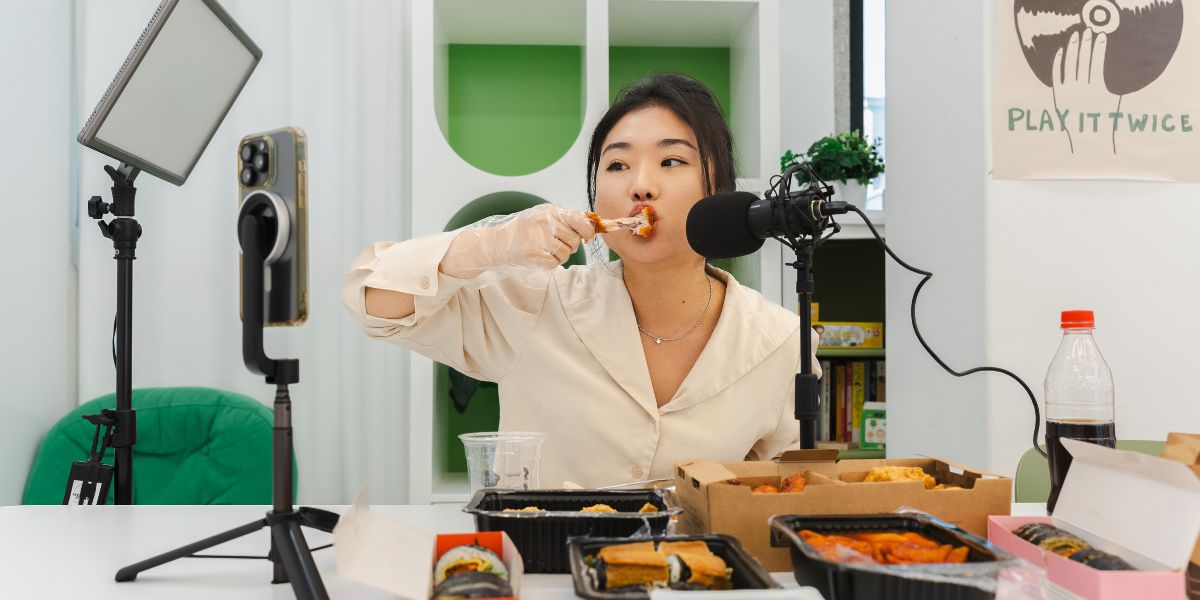
Let me show you five proven strategies with real results from Singapore F&B businesses.
1. The Viral TikTok Launch
A Singapore dessert café launched their durian croissant exclusively on TikTok. They used trending audio with quick cuts showing the croissant being split open, revealing creamy durian filling. The hook in the first 2 seconds: “POV: You’re about to try Singapore’s most controversial dessert.”
Why it worked: TikTok rewards novelty and strong reactions. The durian angle generated both love and hate comments, both boosted engagement and pushed the video to more feeds. Result: 300,000+ views organically, queues during opening week.
What you can replicate: Use trending audio. Create text overlays for sound-off viewing. Show dramatic reveals in the first 2 seconds. Lean into polarizing elements that generate discussion.
2. The Micro-Influencer Campaign
A new ramen restaurant in Tanjong Pagar partnered with 10 local food influencers (5,000-20,000 followers each) for their soft launch. Instead of one expensive macro-influencer, they chose micro-influencers with engaged local foodie audiences. Each received a complimentary tasting menu in exchange for honest content.
Why it worked: Authenticity beats reach. These influencers had genuine connections with their audiences. Their followers trusted their recommendations more than celebrity endorsements. Result: 200+ walk-ins during the first week, all from organic influencer content.
What you can replicate: Identify micro-influencers whose audience matches yours. Offer value (barter works). Set content expectations but allow creative freedom. Track results with unique promo codes per influencer.
3. The Seasonal Menu Play
A Chinese restaurant created a CNY reunion dinner set available only 15 days pre-CNY. The Instagram campaign featured family gathering moments, traditional symbolism of each dish, countdown Stories creating urgency. They sold out all 50 advance bookings within 72 hours.
Why it worked: Limited-time offers create FOMO. Cultural relevance made it shareable among families planning CNY. The 15-day window was long enough for word-of-mouth but short enough to maintain urgency.
What you can replicate: Plan seasonal campaigns around major festivals (CNY, Hari Raya, Deepavali, Christmas). Create compelling visuals. Use countdown timers. Enable advance bookings. Leverage cultural storytelling that resonates emotionally.
4. The UGC Ad Campaign
A bubble tea chain ran Facebook ads featuring real customer photos instead of professional branded content. They requested permission from customers who tagged them, offering SGD 10 vouchers for approved usage. These UGC ads outperformed professional ads by 340% on click-through rate and 180% on conversions.
Why it worked: People trust other customers more than brands. Real people enjoying your product builds credibility that polished content can’t match.
What you can replicate: Monitor tags and mentions for quality customer photos. Request permission with small incentives. A/B test UGC ads against branded content. Include real customer quotes. Ensure photo quality meets platform standards.
5. The Google Business Profile Transformation
A chicken rice hawker stall in Bedok implemented aggressive Google Business Profile optimization. The owner uploaded 200+ photos (every angle of the stall, food prep, dishes, happy customers), posted weekly specials, responded to every review within 24 hours. Within 3 months: ranked #1 for “chicken rice Bedok,” saw a 40% increase in daily customers.
Why it worked: Most hawker competitors had minimal Google presence (5-10 photos, sporadic posts, zero review responses). By treating Google Business as a serious marketing channel, this stall dominated local search.
What you can replicate: Upload 100+ photos across all categories. Post 2-3 times weekly. Respond to 100% of reviews professionally. Ask satisfied customers for reviews via QR codes. Keep information perfectly accurate. Monitor insights to track visibility improvements.
The Expensive F&B Marketing Mistakes to Avoid

Let me save you money by showing you what doesn’t work:
1. Generic Positioning
The error: Your marketing says “Great food, nice atmosphere, good service, affordable prices.” This describes every restaurant trying to succeed.
Why it fails: In Singapore’s crowded market, generic positioning makes you forgettable. Customers can’t remember you, can’t describe you to friends, have no compelling reason to choose you over competitors.
The fix: Own specific positioning. “The late-night ramen spot where CBD professionals decompress after 10pm.” “The instagrammable dessert café that changes themes quarterly.” “The zi char place with halal-certified traditional recipes.” Specific positioning attracts the right customers intensely instead of appealing to everyone weakly.
2. Ignoring Google Business Profile
The error: Your profile is unclaimed, has 8 random photos, shows 2-year-old reviews you never responded to.
Why it fails: You’re leaving money on the table daily. When someone searches “cafes near me,” Google decides who appears in top results based on profile completeness, review quantity and recency, engagement. Ignoring this free channel means losing customers to competitors who spent 2 hours optimizing.
The fix: Block out 2 hours this week. Complete every section. Upload 50+ photos. Respond to all reviews. Then commit 30 minutes weekly for updates and responses. This is the highest-ROI activity for most F&B businesses.
3. Poor Food Photography
The error: Using poorly lit smartphone photos with cluttered backgrounds, bad angles, unappetizing colors.
Why it fails: Visual quality creates your first impression, often your only impression before customers scroll past. Ugly photos kill conversions before they even read your description.
The fix: Learn basic photography (natural light, proper angles, simple styling) or hire a professional for quarterly shoots. The ROI is exponential, good photography improves every single marketing channel simultaneously.
4. No Clear Call-to-Action
The error: Posts saying “Check out our new menu!” with no next step. Ads showing pretty food with no reason to act now.
Why it fails: Without a clear offer and call-to-action, marketing creates awareness but not customers. Awareness doesn’t pay rent.
The fix: Every marketing piece needs a specific offer (“20% off your first order this week”) and unmistakable CTA (“Order now on GrabFood,” “Book your table,” “Visit us before Sunday”). Create urgency with limited-time offers or scarcity messaging.
5. Treating Social Media as One-Way Broadcast
The error: You post daily but never respond to comments, answer DMs, or engage with followers.
Why it fails: Social algorithms reward engagement. When you ignore comments and messages, algorithms suppress your reach. Plus, ignoring customers who take time to engage damages relationships and kills word-of-mouth potential.
The fix: Spend 15-20 minutes daily responding to comments, answering DMs, engaging with followers’ content. This signals active account to algorithms, improving organic reach while building genuine community.
When to Hire a Marketing Agency

1. Signs You’ve Maxed Out DIY
You’re spending 10-15 hours weekly on marketing. Ads perform inconsistently. You should be doing more with data but lack expertise. Marketing is reactive instead of strategic.
If your 15 hours weekly at SGD 50-100/hour equals SGD 3,000-6,000 monthly, professional help often costs less while delivering better results.
2. What Good Agencies Bring
Data expertise: Track attribution, conduct cohort analysis, run multivariate testing. Creative testing: Test 5-10 variations simultaneously. Sophisticated paid advertising: Manage targeting, bidding, ROAS optimization. True omnichannel coordination: Instagram ads retarget website visitors, email promotes Instagram content, Google Ads sync with GrabFood promotions.
At Katartizo, we work exclusively with Singapore F&B businesses. We understand the market because we’re in it daily: Singapore-specific insights, professional food photography and video, managed social campaigns, local SEO and Google Business optimization, review management, data-driven optimization focused on ROAS and revenue.
For F&B businesses ready to scale, partnering with a specialized social media marketing agency in Singapore accelerates growth while freeing you to focus on creating exceptional dining experiences. When evaluating agencies, look for F&B-specific experience and transparent reporting. The best digital marketing agencies in Singapore has to show you exactly how marketing drives revenue.
Building Your Sustainable Strategy

1. Principles That Work Long-Term
- Framework beats tactics. Platforms change. Algorithms evolve. But frameworks, understanding positioning, knowing customer journey, tracking revenue drivers, stay valuable.
- Consistency beats virality. One viral TikTok brings a week of excitement. Consistent Google optimization and review management build sustainable growth over years.
- Distribution beats volume. You don’t need 5 posts daily. Ensure content you create reaches potential customers through algorithms, strategic promotion, organic sharing.
- Data beats assumptions. Track which platforms drive visits, which ads generate orders, which partnerships deliver ROI. Measure, analyze, adjust.
- Local beats global. Singapore-specific strategies beat generic tactics. Understanding hawker culture, GrabFood’s dominance, and local platforms like Burpple gives competitive advantage.
2. Your Action Plan Starting Today
- Optimize Google Business Profile (2 hours): Complete every section, upload 50+ photos, respond to reviews. Highest-ROI action.
- Audit your visuals (1 hour): Honestly evaluate food photos. If unappetizing, invest in improvement.
- Set up review generation (30 minutes): Create QR codes, train staff, commit to 48-hour responses.
- Choose 1-2 primary platforms: Focus deeply on most effective channels.
- Track basic KPIs weekly: Order volume, average order value, review count. These reveal whether marketing works.
Final Thoughts
Singapore’s F&B market is projected to nearly double from USD 28.92 billion to USD 68.14 billion by 2030. Massive opportunities exist for businesses that market effectively.
The difference between thriving and barely surviving often comes down to marketing execution, meeting customers where they are, building trust through reviews and social proof, creating experiences worth sharing.
Good marketing for F&B doesn’t require massive budgets. It requires understanding your market, knowing your customers, and executing consistently on strategies that work.
Need help with your F&B marketing? Katartizo is a Singapore digital marketing agency that helps local businesses, including restaurants, cafés, and cloud kitchens grow their online presence and attract more customers.
From food photography to review management, social campaigns to local SEO, we work with F&B brands navigating Singapore’s competitive market. Contact us to explore how we can support your business.