Healthcare consumers have gone digital-first. Before a patient ever calls a clinic, requests an appointment, or fills out a referral form, they are almost always doing one thing first: looking you up online. They are reading reviews, watching Reels, scrolling LinkedIn for the doctor’s credentials, and judging whether your brand feels trustworthy enough to hand over their health to.
That makes social media marketing in the healthcare industry one of the most consequential — and most carefully regulated — marketing disciplines today. A single post can build a clinic’s reputation for years or trigger a regulatory complaint within hours. In a sector where trust is the entire product, getting social right is no longer optional.
This guide explains how healthcare organisations, clinics, and SME providers can use social media effectively in 2026: which strategies actually work, which platforms matter, what compliance traps to avoid (including the Singapore-specific ones most global guides ignore), and how to measure whether your effort is paying off.
Table of Contents
What Is Social Media Marketing in the Healthcare Industry?

Social media marketing in the healthcare industry is the strategic use of social platforms — Facebook, Instagram, LinkedIn, TikTok, YouTube, and emerging channels — by healthcare organisations to educate patients, build trust, promote services, attract talent, and engage with their communities, all while staying compliant with privacy laws and professional ethics codes.
It looks similar to consumer marketing on the surface, but the rules are fundamentally different. Where a beauty brand can show a dramatic before-and-after, a healthcare brand often cannot. Where a fashion influencer can share a customer’s review verbatim, a doctor in Singapore can be disciplined for doing the same. Where a tech company can A/B test bold claims, a clinic must substantiate every statement it makes about a treatment.
The shift in stakes is what separates healthcare marketing from everything else. Trust is the actual deliverable. Without it, every other metric collapses.
Why Social Media Matters More Than Ever in Healthcare

1. Patients Are Researching Healthcare Online Before Making Decisions
The data is unambiguous. According to Rater8’s 2025 patient choice report, 84% of patients now check online reviews before choosing a new provider, and a Digital Health survey from late 2025 found that one in four UK patients are now turning to social media and AI tools for health information.
In Singapore, the picture is even more pronounced. The country has roughly 88% social media penetration — among the highest in Southeast Asia — meaning your patients aren’t just available on social media, they are living there. Clinics, doctors, treatments, and reviews are all subject to a fast, casual judgement scroll before a patient ever picks up the phone.
2. Social Media Helps Humanise Healthcare Brands
Healthcare has historically felt clinical, transactional, and intimidating. Social media inverts that. A short video of a nurse explaining how to prepare for a procedure, a behind-the-scenes look at a clinic’s morning huddle, or a doctor patiently debunking a common myth — these formats transform an unfamiliar institution into a recognisable, human team. That accessibility is what turns “a hospital near me” into “my hospital.”
3. Healthcare Marketing Is Shifting Toward Ongoing Engagement
The old model — run a campaign, hope for bookings — is dying. Today’s healthcare marketing is continuous: patient education in the awareness stage, credibility-building during consideration, follow-up community in the retention stage. Social media is the only channel that operates across all three at once.
Where Social Media Fits in the Patient Journey

Most healthcare social media advice treats every post the same way. That is the biggest strategic mistake brands make. Social media works very differently depending on where the patient is in their journey, and your content mix should reflect that.
1. Awareness Stage: Educational and Preventive Content
This is where most patients first encounter your brand — not searching for “your clinic”, but searching for symptoms, conditions, or general wellness questions. Content that performs at this stage is educational and explainer-driven: short videos answering “should I be worried about X symptom”, carousel posts breaking down a common condition, myth-busting reels.
The goal isn’t conversion here. It is familiarity. When the same patient later searches for a specialist, your name is already in their mental shortlist.
2. Consideration Stage: Doctor Expertise and Clinic Credibility
Now the patient is evaluating. They want to know: Is this provider qualified? Does this clinic feel professional? Will I be treated well? Content at this stage should showcase doctor credentials, walk through what a first consultation looks like, introduce the team, and signal clinical authority — without making medical claims that cross compliance lines.
In Singapore specifically, this is where most brands trip up. Tempting as it is to repost a glowing patient review, doctors are restricted from doing so on channels they control. The workaround is to focus on third-party authority signals: media features, professional accreditations, academic publications, and conference participation.
3. Retention and Loyalty Stage: Follow-Up Engagement and Community Building
Once a patient is in your care, social media keeps the relationship alive. Post-visit education, seasonal health reminders, community health drives, Q&A sessions on Instagram Stories, and recurring “ask the doctor” formats all build long-term loyalty. The patient who interacts with your clinic between visits is the patient who returns and refers.
The Most Effective Social Media Strategies for Healthcare Brands
1. Educational Content Marketing
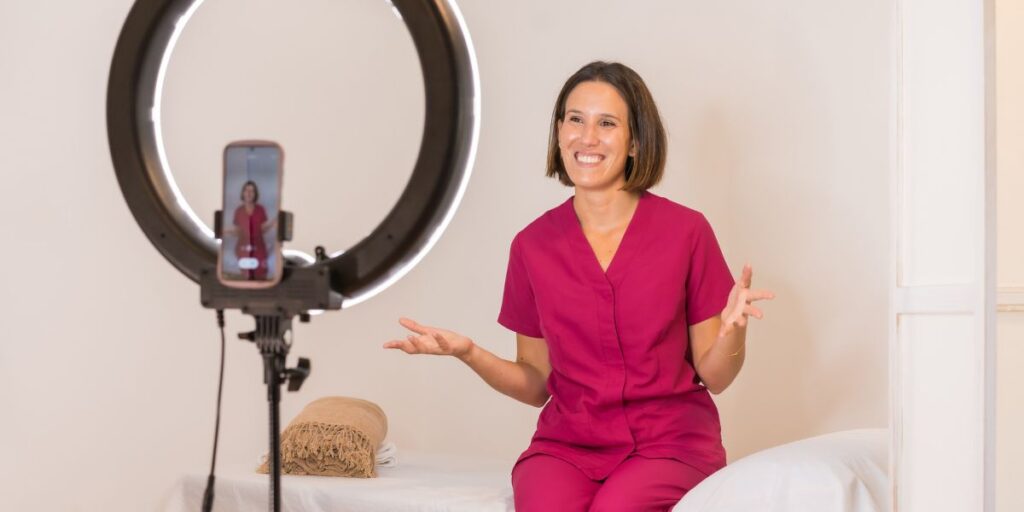
If your healthcare brand only does one thing well on social media, make it this. Educational content is the highest-leverage format in healthcare for one simple reason: it earns trust without selling. A 60-second video explaining what causes lower back pain creates more brand affinity than a polished ad ever will.
Think in three formats:
- Explainers — “What is X condition?” or “How does Y treatment work?”
- Myth-busting — Address common misinformation directly, with clear sourcing.
- Preventive tips — Daily-life advice your patients can actually apply.
The brands winning in healthcare today (Cleveland Clinic, Mayo Clinic, Harvard Health) all share this DNA: they teach first and promote second.
2. Community and Engagement-Focused Marketing
Posting is broadcasting. Engagement is marketing. Healthcare audiences treat comments and DMs as part of the patient experience — slow responses or unanswered questions actively damage brand perception. Build active community engagement into your workflow: respond to comments within 24 hours, host live Q&A sessions, and use polls and Stories to invite participation rather than just attention.
This is closely tied to having a strong social media marketing strategy that prioritises listening as much as it does publishing.
3. Storytelling and Human-Centred Content
Stories cut through. A short Reel about a paediatric nurse’s morning routine, a profile of a senior cardiologist’s path into medicine, or a behind-the-scenes look at a community health drive resonates more than any service description. The caveat: any storytelling involving real patients requires explicit written consent — and in Singapore, even then, certain formats (testimonials and before/after content) are off-limits for doctors.
When in doubt, anchor stories to staff, not patients. There is no compliance risk in showcasing your own team, and it humanises the brand just as effectively.
4. Paid Social Media Campaigns for Healthcare
Organic reach has its limits. Paid social — used carefully — fills the gap, especially for service awareness, appointment generation, and recruitment campaigns. The compliance bar is higher than for general consumer ads: claims must be substantiated, targeting must avoid sensitive health categories that platforms restrict, and creative must pass internal review before it ever goes live.
If your team isn’t sure where paid social fits into the broader media mix, this is where understanding how to allocate budget for digital marketing becomes critical — healthcare marketing typically requires a higher proportion of educational, top-of-funnel content than other industries.
Best Social Media Platforms for Healthcare Marketing
Not every platform deserves your time. Healthcare brands consistently get more from focused excellence on two or three channels than from a thin presence on six.
| Platform | Best for | Healthcare use case | Primary audience |
| Community building, local reach | Health education, community events, patient FAQs | Broad; skews 30–65+ | |
| Visual storytelling, Reels | Educational Reels, staff spotlights, behind-the-scenes | 18–44 | |
| Professional branding, recruitment | Clinician thought leadership, B2B health, talent attraction | Healthcare professionals, job seekers | |
| TikTok | Short-form education | Myth-busting, quick health tips, humanising clinicians | 18–34 |
| YouTube | Long-form education | Procedure explanations, patient Q&A series, provider profiles | Broad |
1. Facebook for Community Building and Local Reach
Facebook still dominates for local healthcare audiences, especially among patients aged 30 and above. Use it for community events, health awareness campaigns, vaccination drives, and educational long-form posts.
2. Instagram for Educational and Visual Content
Instagram’s Reels format has become the default home for healthcare short-form education. Carousel posts also perform exceptionally well for breaking down conditions or treatments into digestible visual sequences.
3. LinkedIn for Professional Healthcare Branding
LinkedIn’s role in healthcare has expanded sharply in 2026. Industry analysis shows healthcare content engagement rising on the platform, with more clinicians publishing thought leadership and more healthcare organisations using LinkedIn for both recruitment and B2B positioning. For private practices and hospital groups in Singapore, this is a high-leverage channel that’s still underused locally.
4. TikTok and Short-Form Video for Healthcare Education
TikTok has become healthcare’s surprise education platform. Clinician-led accounts like Dr. Mike Varshavski have demonstrated that complex medical topics can be both accessible and trustworthy in short-form video. Singapore healthcare brands targeting Gen Z audiences (mental wellness, sexual health, aesthetic medicine) should prioritise it.
Healthcare Social Media Trends in 2026

1. AI-Assisted Healthcare Marketing — With Compliance Guardrails
Generative AI has moved from novelty to workflow. Healthcare brands are using it to draft posts, repurpose long-form content into social copy, generate first-draft captions, and personalise messaging at scale. But 2026 industry analysis is unanimous on the constraint: AI cannot be the final approver of healthcare content.
The model that’s emerging is “human + AI”: AI handles the volume, clinicians and compliance officers handle the accuracy. This is especially important given that AI-generated medical misinformation — including deepfake-style impersonations of real doctors — has become a real reputational risk in 2026.
For practical guidance on integrating AI into healthcare workflows, see our take on AI in healthcare marketing.
2. Short-Form Educational Video Growth
Short-form video isn’t a trend anymore — it’s the default. A PubMed-indexed 2025 study found that short-form videos on TikTok and similar platforms were highly effective for medical education, perceived as motivating, engaging, and supportive of professional skills development. For 2026, expect short-form clinician-led content to continue as the highest-performing format across nearly every healthcare segment.
3. More Personalised Healthcare Communication
Generic broadcast content is losing ground to segmented, audience-specific messaging. A clinic with both paediatric and geriatric services should not be running the same content for both audiences — and increasingly, patients expect that nuance.
4. Rising Demand for Authenticity and Trust
The polished, corporate aesthetic that dominated healthcare social media five years ago now reads as inauthentic. 2026 audiences want real people, real settings, and visible expertise. The trend is toward employee advocacy, clinician-led video, and “show, don’t tell” content — a shift toward increasing brand awareness through credibility rather than production polish.
The Challenges and Compliance Realities of Healthcare Social Media

This is the section most competitor articles glaze over. It is also the section where Singapore brands most need clarity — because the rules here are stricter than almost anywhere else in the world.
1. Patient Privacy and Compliance Risks
In the US, HIPAA’s Privacy Rule has driven $144.9 million in settlements across 152 cases, with updated civil monetary penalty amounts taking effect in January 2026 to reflect inflation adjustments. The risks are not theoretical — they apply to even unintentional disclosures of protected health information.
In Singapore, the equivalent landscape is shaped by three overlapping frameworks:
a. The Healthcare Services Act (HCSA). Under the HCSA Advertisement Regulations, licensed healthcare institutions in Singapore may only advertise through approved media — which does include social media — but content is tightly restricted. False or misleading claims, exaggerated success rates, guarantees of cure, and promotion of treatments for “strong-disease” conditions (cancer, diabetes, kidney disease, infertility) are all prohibited in general-public advertising.
b. The Singapore Medical Council (SMC) Ethical Code. This is where many clinics get caught off-guard. The SMC Ethical Code and Ethical Guidelines prohibits doctors from publishing patient testimonials or before-and-after content on any media they control — including their own social media accounts, websites, blogs, and YouTube channels. Even reposting a patient’s organic review is treated as advertising. SMC’s 2024 advisory reinforced this position and warned that breaches may trigger disciplinary action.
c. The Personal Data Protection Act (PDPA). Singapore’s PDPA requires explicit consent before any personal data — including identifiable photos, videos, or testimonials — is used for marketing. Even when a patient voluntarily posts a review online, separate consent is required before a clinic can repost, screenshot, or embed it.
Practical implication for Singapore healthcare brands: the testimonial-and-before/after playbook that dominates global healthcare marketing simply does not work here. Build your strategy around staff stories, clinical education, and third-party authority signals instead.
2. Medical Misinformation and Content Accuracy
Every claim a healthcare brand makes on social media needs to be substantiated. Vague phrasing like “clinically proven” or “doctor recommended” without specific evidence is exactly the kind of language that triggers regulatory scrutiny. Build a clinical review step into your content approval workflow — every time, no exceptions.
3. Balancing Engagement with Professionalism
Healthcare brands often struggle to be human without being unprofessional. The line is real but workable: tone can be warm, conversational, and even humorous, but never at the expense of clinical credibility. A nurse explaining sleep hygiene can be casual. A claim about a cancer treatment cannot.
4. Managing Reputation and Negative Feedback
Negative reviews and difficult comments are inevitable. The wrong response — defensive, dismissive, or worse, sharing patient details to “set the record straight” — can escalate a minor complaint into a regulatory issue or PR crisis. Have a documented response protocol, train your social media team on it, and route anything sensitive to clinical or legal review before responding publicly.
Common Mistakes Healthcare Brands Should Avoid on Social Media
Beyond the compliance pitfalls, a handful of strategic mistakes show up repeatedly in healthcare brands that aren’t getting traction:
- Overly promotional messaging — Audiences tune out clinics that constantly broadcast services. The 80/20 rule holds: 80% educational and community content, 20% promotional.
- Inconsistent posting — Patients judge active brands more favourably than dormant ones, even with fewer followers. Consistency beats volume.
- Publishing complex or inaccessible medical content — If your post requires a medical degree to understand, it isn’t doing its job.
- Ignoring engagement — Comments and DMs are signals of interest, not noise. Treat them as part of the patient experience.
- Chasing trends without strategy — Not every viral format suits a healthcare brand. Pick what aligns with your audience and brand voice.
How to Measure Success in Healthcare Social Media Marketing

Vanity metrics — followers, likes — are the easiest to track and the least meaningful. Healthcare social media success is measured through metrics that connect to actual patient outcomes and business performance.
1. Engagement Metrics That Matter
According to Sprout Social’s 2025 Content Benchmarks Report, engagement rate (interactions ÷ reach) is a more reliable signal than raw follower count. Saves, shares, and comments are the highest-quality engagement signals because they indicate the content was useful enough to revisit or pass along.
2. Patient Acquisition and Appointment Metrics
This is the bridge between social and revenue. Track website referral traffic from social platforms, appointment request form submissions attributed to social campaigns, and phone enquiries that mention social channels. These are the KPIs for marketing that justify the spend.
3. Trust and Brand Perception Indicators
Harder to measure but increasingly important: brand sentiment in comments and DMs, share of voice against competitors in your specialty, and the volume of unprompted positive mentions. Social listening tools make this trackable.
Bringing It All Together: Strategy, Trust, and Compliance
Social media marketing in the healthcare industry in 2026 demands more nuance than any other marketing discipline. Get the strategy right and you build a brand patients trust before they ever walk through your door. Get it wrong — through compliance lapses, misinformation, or tone-deaf content — and you can damage years of reputation in a single afternoon.
The brands that win this decade will share three traits: they will educate before they promote, they will treat compliance as a creative constraint rather than an obstacle, and they will commit to the long game of community and trust rather than chasing short-term engagement spikes.
For Singapore healthcare brands navigating HCSA, SMC, and PDPA requirements alongside building a credible social presence, working with a social media marketing agency in Singapore that understands both the strategic and regulatory landscape can shortcut years of trial and error. At Katartizo, we help healthcare providers and SMEs build social strategies that grow patient trust without crossing compliance lines.
Frequently Asked Questions
What is social media marketing in the healthcare industry?
It’s the strategic use of social media platforms by healthcare providers, clinics, and health brands to educate patients, build trust, promote services, and engage with their communities — all while complying with healthcare advertising and privacy regulations.
Which social media platforms are best for healthcare marketing in 2026?
Facebook and Instagram remain strongest for community building and patient engagement. LinkedIn has grown sharply for clinician thought leadership and recruitment. TikTok and YouTube are leading for short-form and long-form healthcare education respectively.
Can Singapore doctors share patient testimonials on social media?
No. The Singapore Medical Council prohibits doctors from publishing patient testimonials or before-and-after content on channels they control, including their own social media accounts and websites. This includes reposting reviews that patients have voluntarily shared elsewhere.
How often should a healthcare brand post on social media?
Consistency matters more than frequency. Three high-quality, compliant posts per week on one or two well-chosen platforms will outperform daily posts spread across five platforms.
Is it legal to use AI to create healthcare social media content?
Yes — AI tools can draft posts, generate captions, and repurpose content. But every AI-generated post must go through human review for clinical accuracy and compliance. AI should never be used to process or input protected health information.
What are the biggest compliance risks for healthcare social media in Singapore?
The three most common pitfalls are: publishing patient testimonials or before-and-after photos (banned by SMC for doctors), making unsubstantiated health claims (regulated by HCSA), and using patient photos or stories without explicit written consent (governed by PDPA).
How do you measure ROI for healthcare social media marketing?
Look beyond followers and likes. Track website referral traffic from social, appointment request form submissions attributed to social campaigns, engagement rates on educational content, and qualitative signals like brand sentiment and share of voice in your specialty.